OVERVIEW
Reimagining exploration as a journey
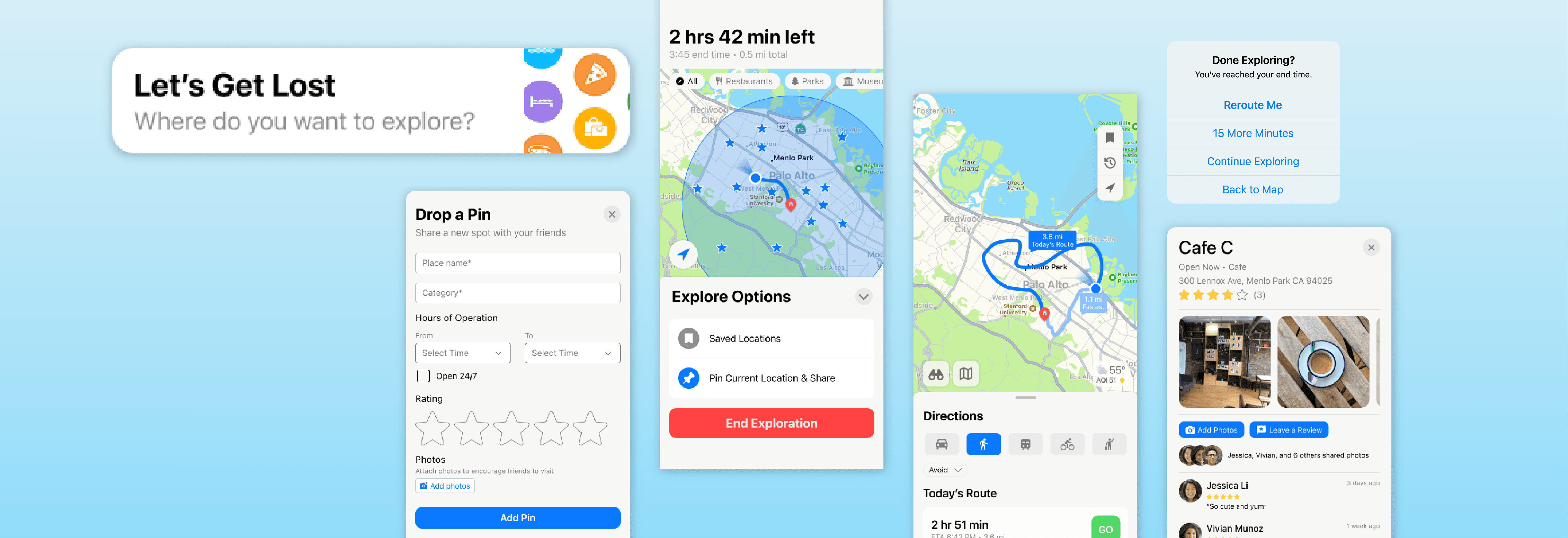
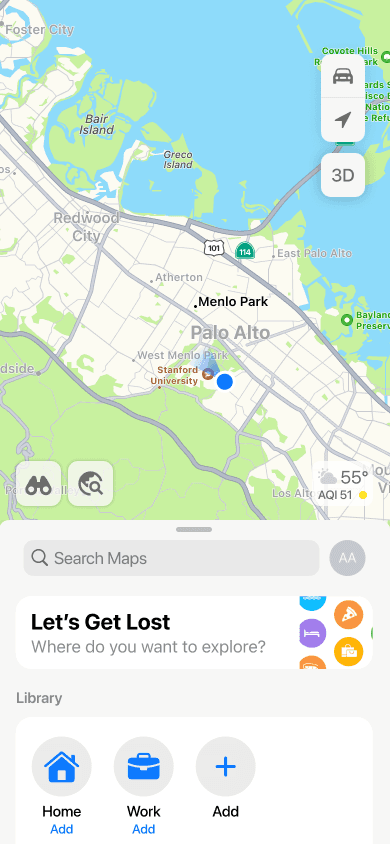
Inspired by the story of Hansel and Gretel leaving breadcrumbs to find their way home, I designed a concept feature for Apple Maps that encourages users to wander and explore their surroundings. This project explores how navigation apps might support curiosity-driven exploration while still providing a sense of orientation and safety.
translating research findings and participant responses into features that encourage open-ended navigation.
to ensure the feature integrates seamlessly with Apple Maps, prioritizing familiarity and reducing potential user confusion.
by examining when, where, and how users would engage with the feature, shaping design decisions around those interactions.
PREVIEW & FEATURES
01
Exploring Within a Timeframe
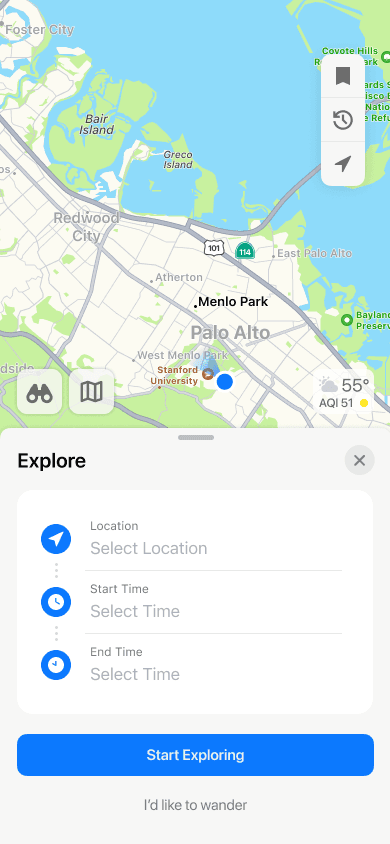
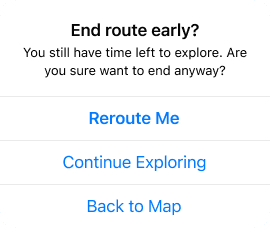
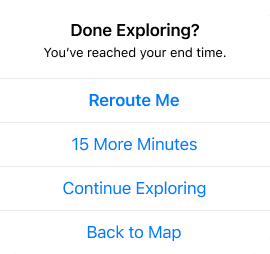
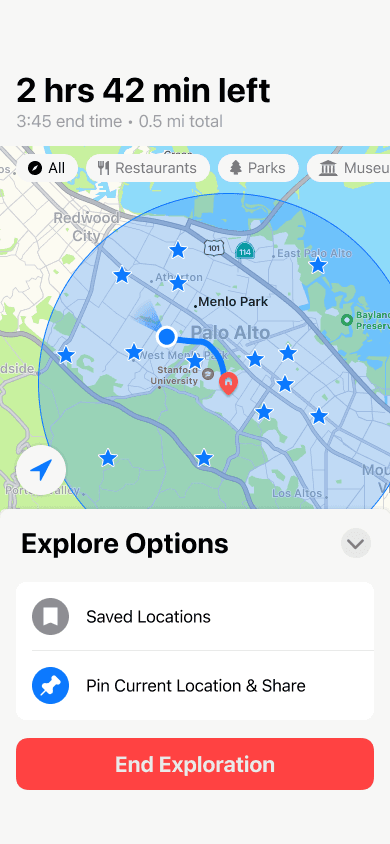
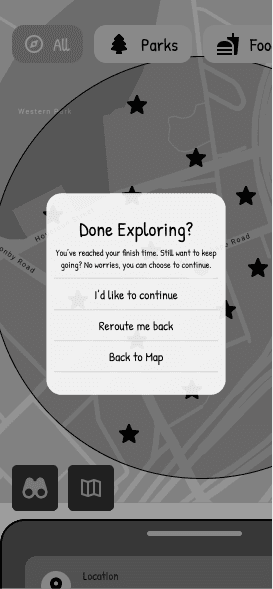
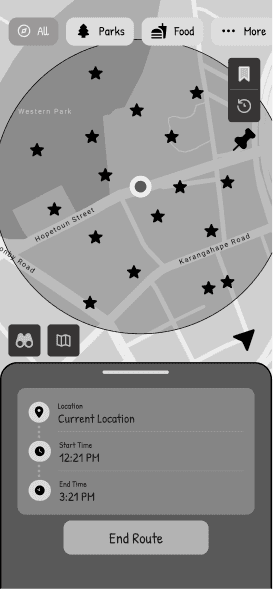
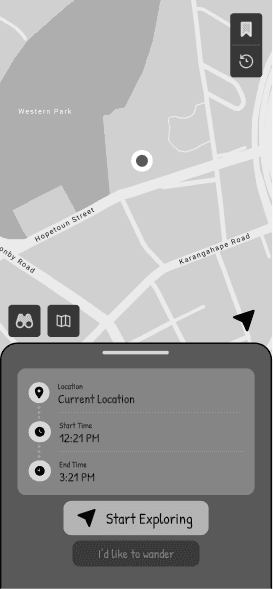
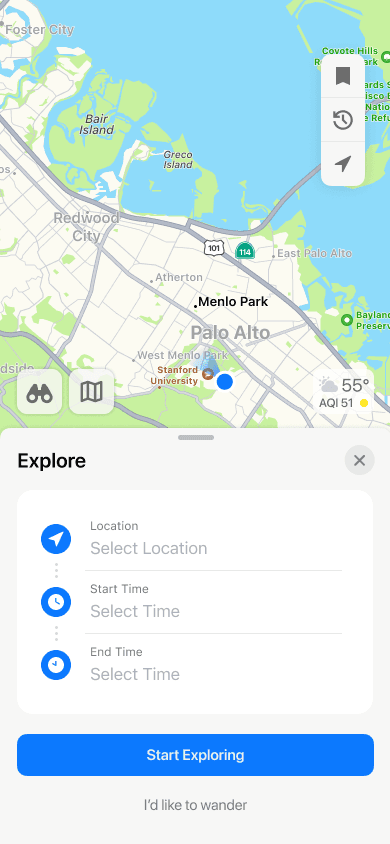
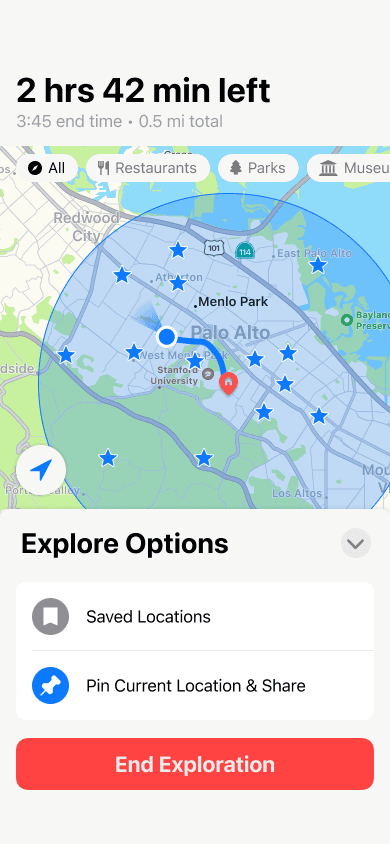
Users can set a start and end time before beginning their journey. Based on this timeframe, the app suggests an exploration radius and sends a reminder notification as the end time approaches to help users manage their time.
02
Social Discovery
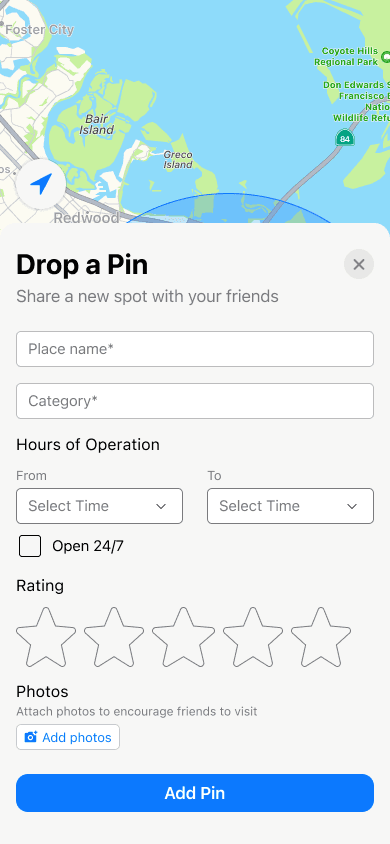
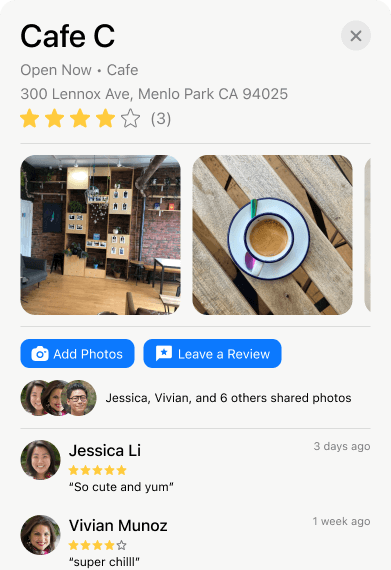
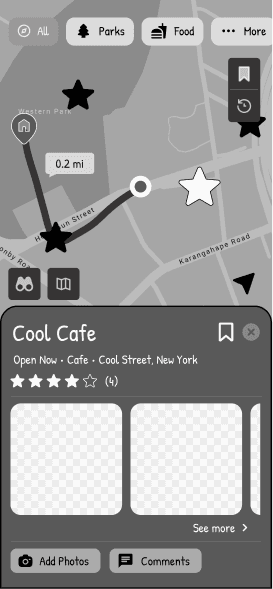
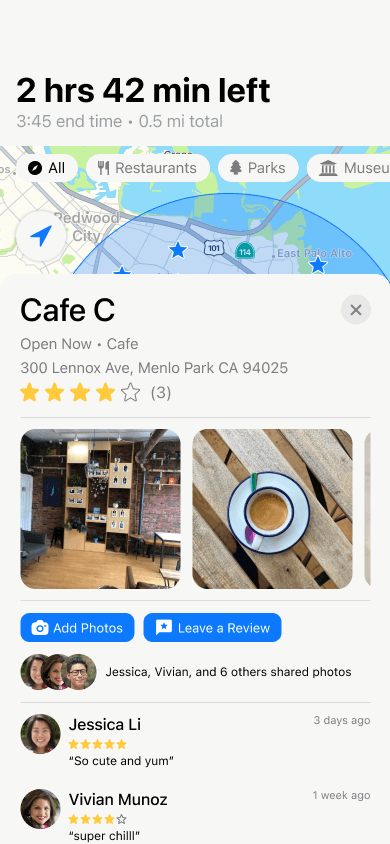
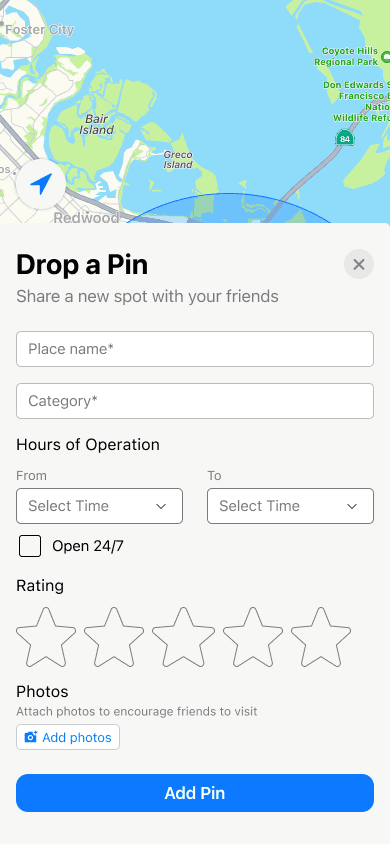
Users can drop a pin to create new locations and share them with their friends. For every place, they can view photos, leave reviews, and see what their friends have posted.
03
Breadcrumb Trail Navigation
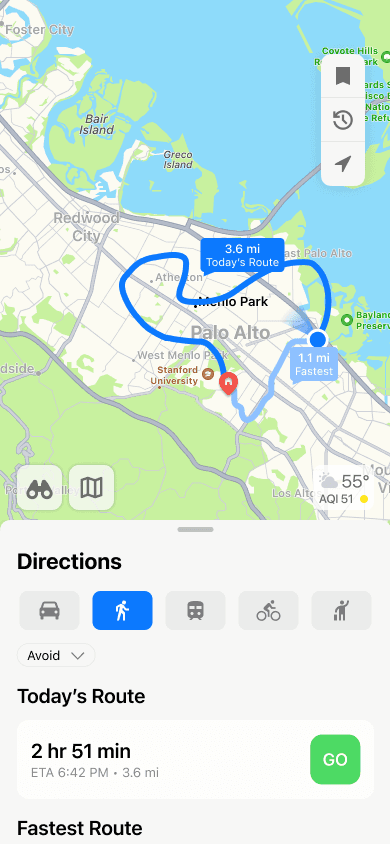
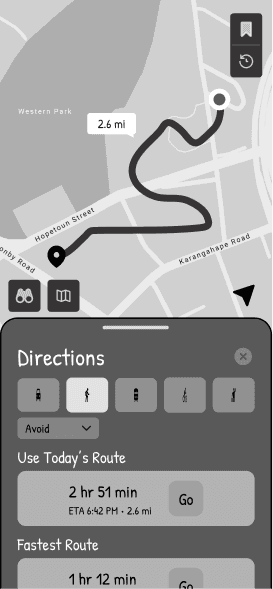
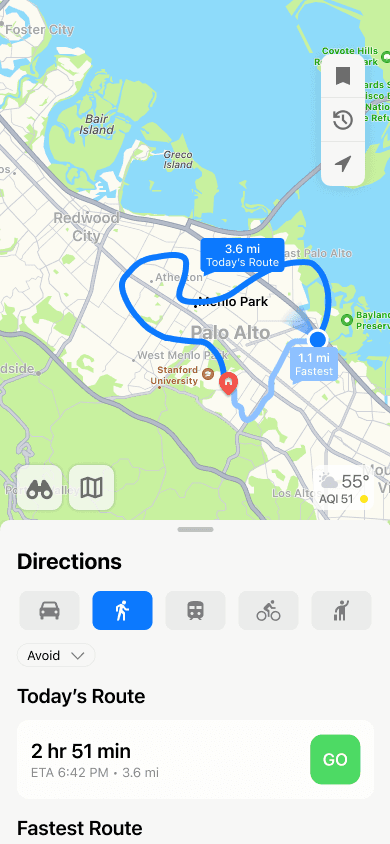
As users explore, the app quietly tracks their path, creating a breadcrumb trail of where they’ve been. When the , users can retrace their steps, view their full route, or find the fastest way back to their starting point.
THE PROBLEM
Navigation apps are designed to get users from point A to point B as efficiently as possible, which is great. Until it's not.
Modern navigation tools prioritize efficiency and step-by-step directions, which can discourage spontaneous exploration. As a result, users often miss opportunities to discover new places in their surroundings because they are guided along fixed routes rather than encouraged to wander and explore.
How might we reimagine navigation tools to support open-ended journeys instead of just point-to-point travel?
USER INTERVIEWS
I conducted student interviews to understand how people approach exploration and getting lost in unfamiliar places.
I interviewed students across different majors and class years to gather diverse perspectives. The goal was to understand which navigation apps they currently use, the strengths and pain points of those tools, and their experiences and emotions around getting lost while exploring.
INTERVIEWEE QUOTES
KEY FINDINGS
01
02
03
04
USER PERSONA
Ava Lee
20 y/o Student
ABOUT
Ava enjoys exploring new restaurants, cafes, and parks in her free time. She loves discovering hidden gems and isn’t afraid to take the road less traveled, but prefers having a reliable way to find her way back when exploring alone.
BEHAVIORS
•
Uses navigation apps when she has a destination in mind
•
Easily loses track of time
GOALS & MOTIVATIONS
•
Maximize her free time
•
Making memories with friends
•
Discovering new places around the city
PAIN POINTS
•
Bad time management makes it risky to explore without planning
•
Navigation apps make her feel like she needs to plan destinations and stick to them
INITIAL CONCEPTS
I decided on a couple concepts, and drafted up paper prototypes.
I explored several design directions, including a gamified experience, a socially driven exploration app, and a navigation tool inspired by the Hansel and Gretel breadcrumb trail.
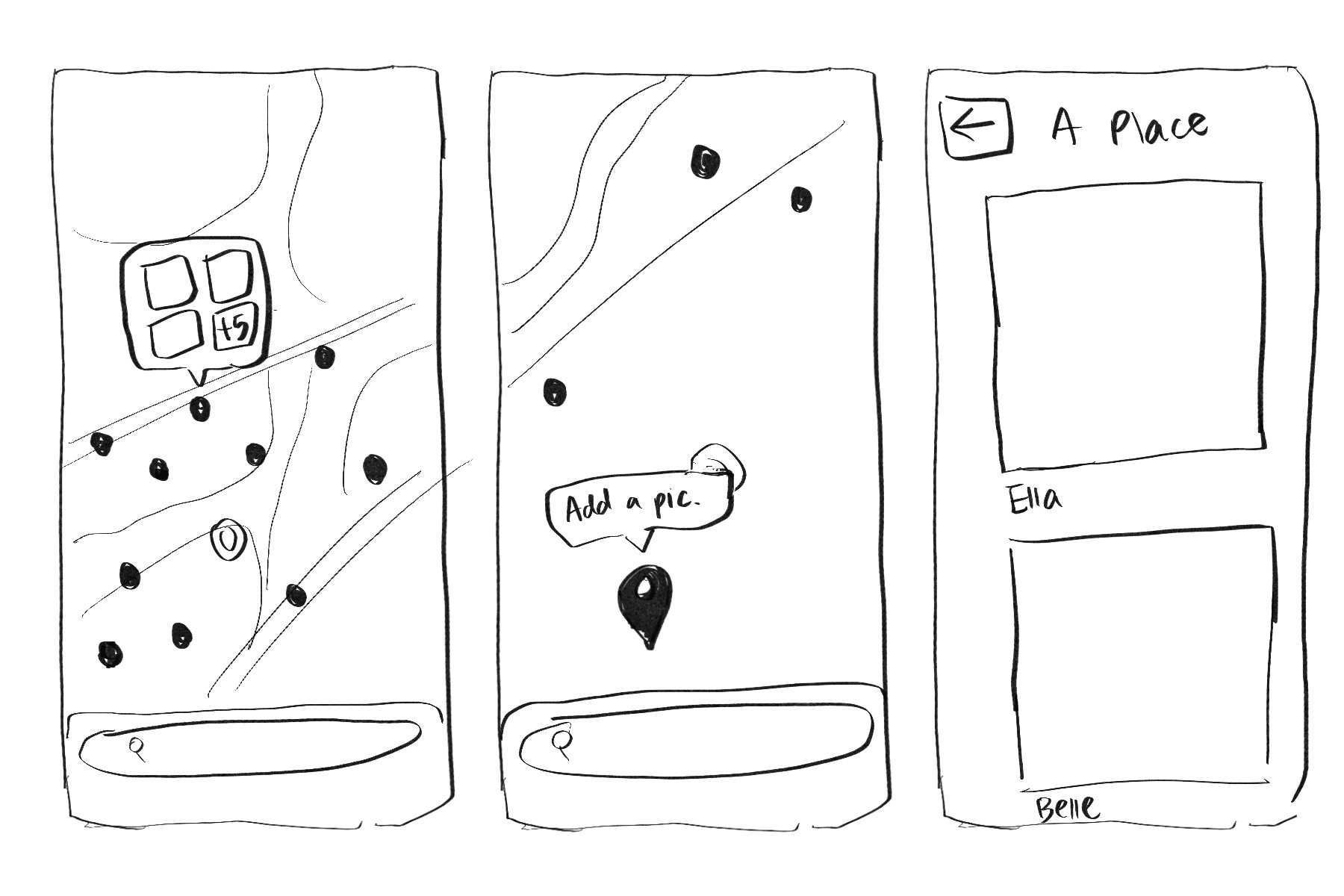
Users can scrapbook their explorations by uploading photos to visited locations, viewing friends’ photos at the same spots, and pinning new locations for more obscure discoveries.
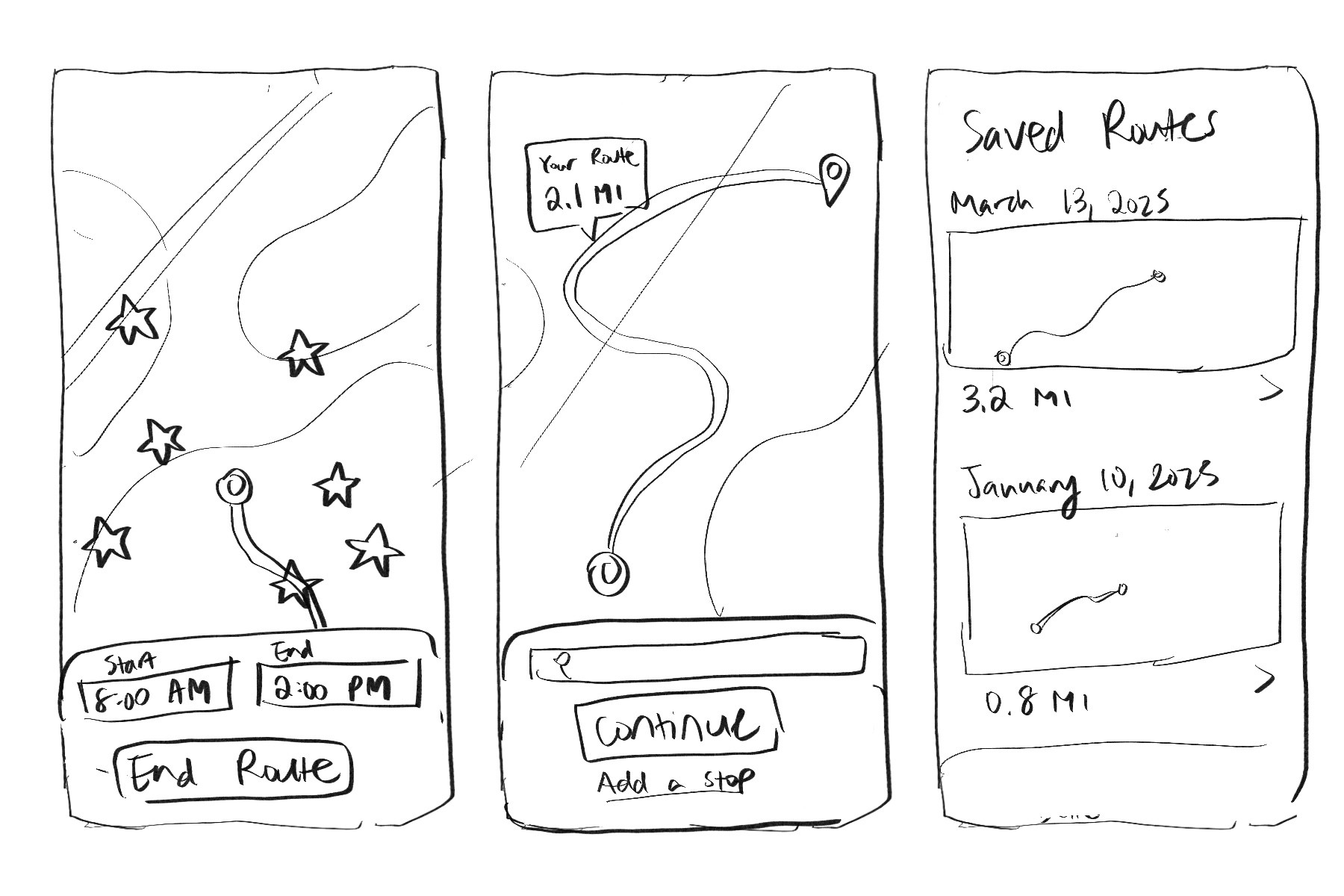
Users create their own path while exploring, with the app tracking their journey and leaving a breadcrumb trail for easy navigation back.
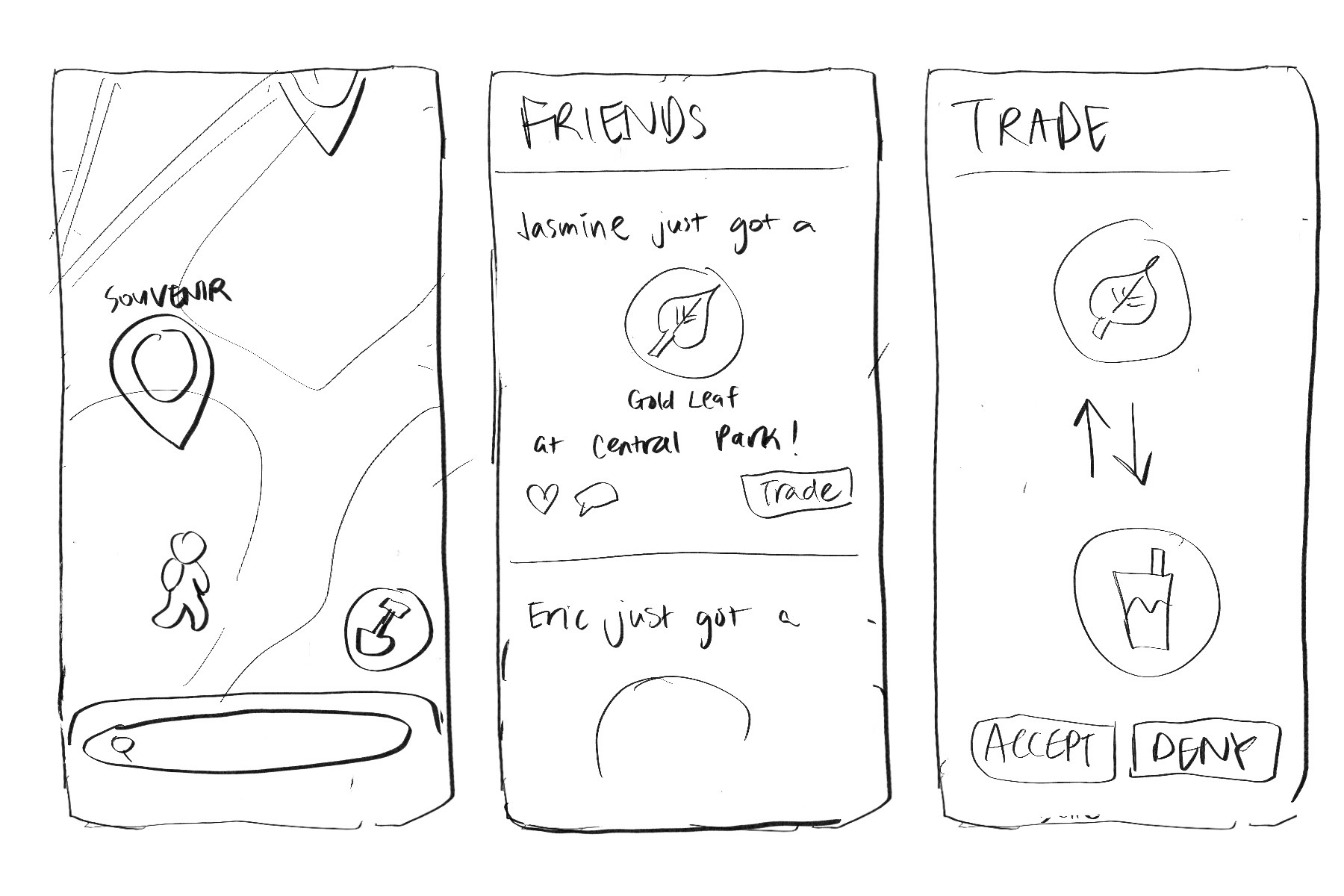
Users are encouraged to explore through a gamified system where discovering new places unlocks hidden treasures, badges, and souvenirs.
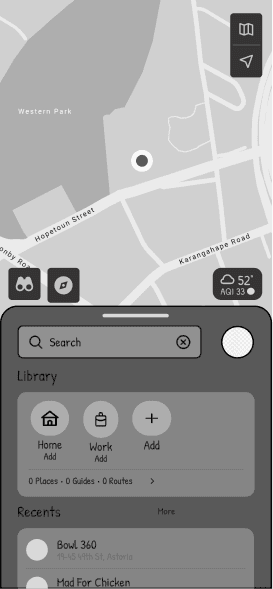
After feedback, I focused on the first two concepts and dropped gamification, since I felt generic rewards wouldn’t be very compelling. Drawing from my user interviews, I created and tested lo-fi prototypes focused on guided exploration, social place-sharing, and time awareness. The app balances hands-on and passive use, acting as a "breadcrumb trail" so users can confidently explore without constantly checking their phones.
LO-FI WIREFRAMES
RESULTS
Final Prototype & Demo
FINAL TAKEAWAYS
Designing for Context and Mental Models
This project reinforced the importance of designing for the broader user experience and real-world context. I learned to consider users’ existing mental models and rely on familiar design patterns to prevent confusion, especially when integrating a new feature into an established platform like Apple Maps.
Designing Against the Grain
One of the biggest challenges was designing a navigation experience that encourages users to "get lost" rather than follow directions. Reframing a tool traditionally built for efficiency into one that supports exploration required rethinking how navigation features guide users.
If I Had More Time…
I would further develop the social aspect of the feature. In particular, I would explore ways to differentiate the location review and sharing system from existing platforms like Apple Maps or Google Maps to create a more unique and engaging experience.